tributesinwood

Wood Carvings by Mark Sheridan

Nearing Completion

I spent a few more hours on the cabin yesterday and probably won’t get at it too much today with some running around we need to do on a typical Saturday.  Beautiful day in Kingston today.

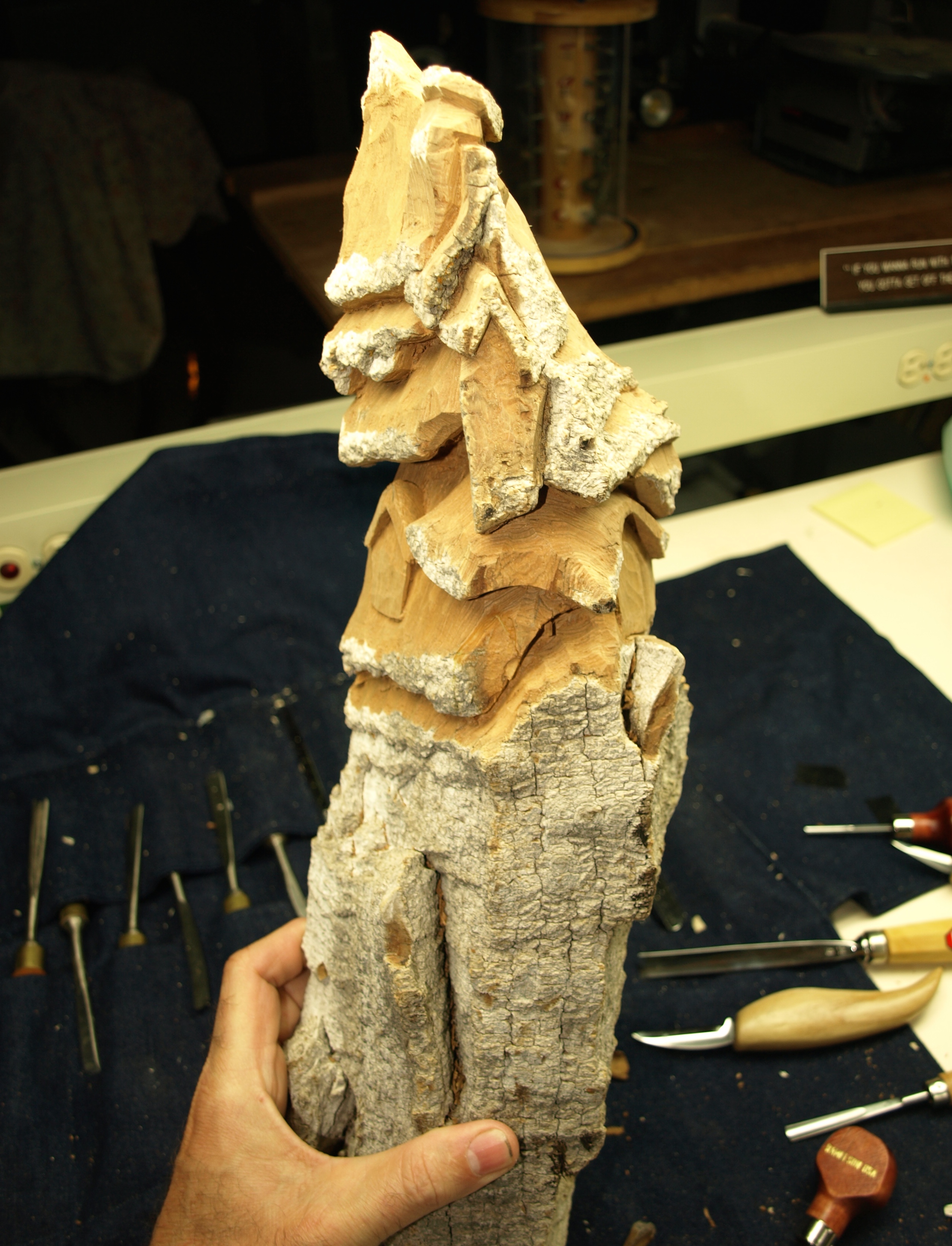
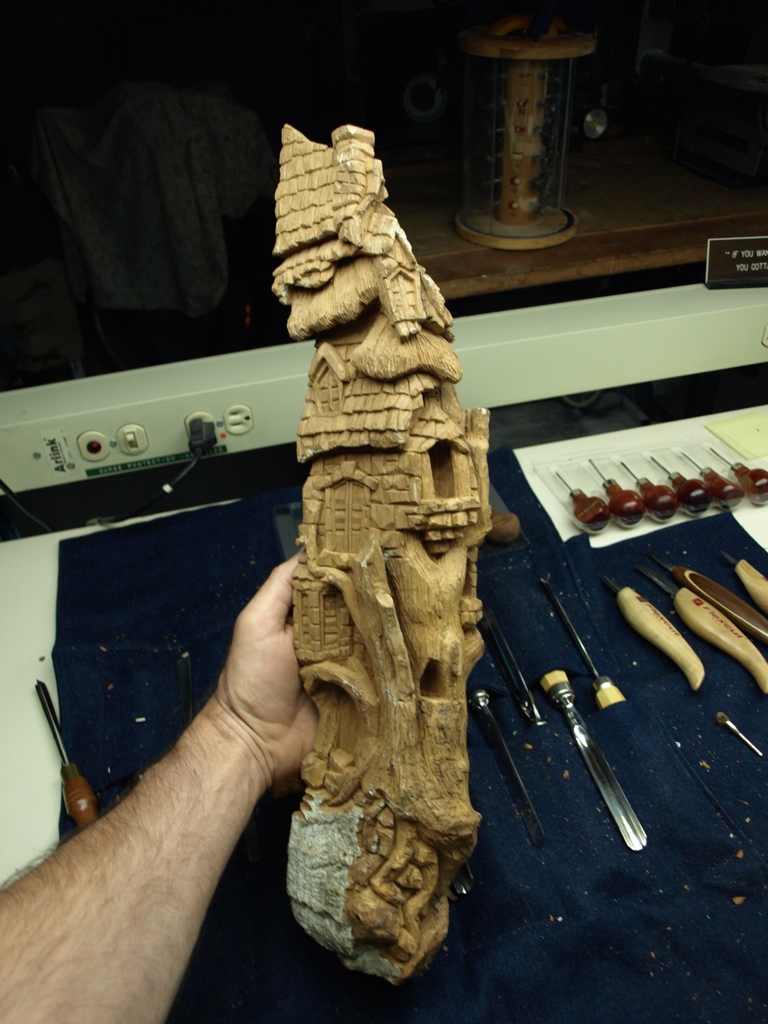
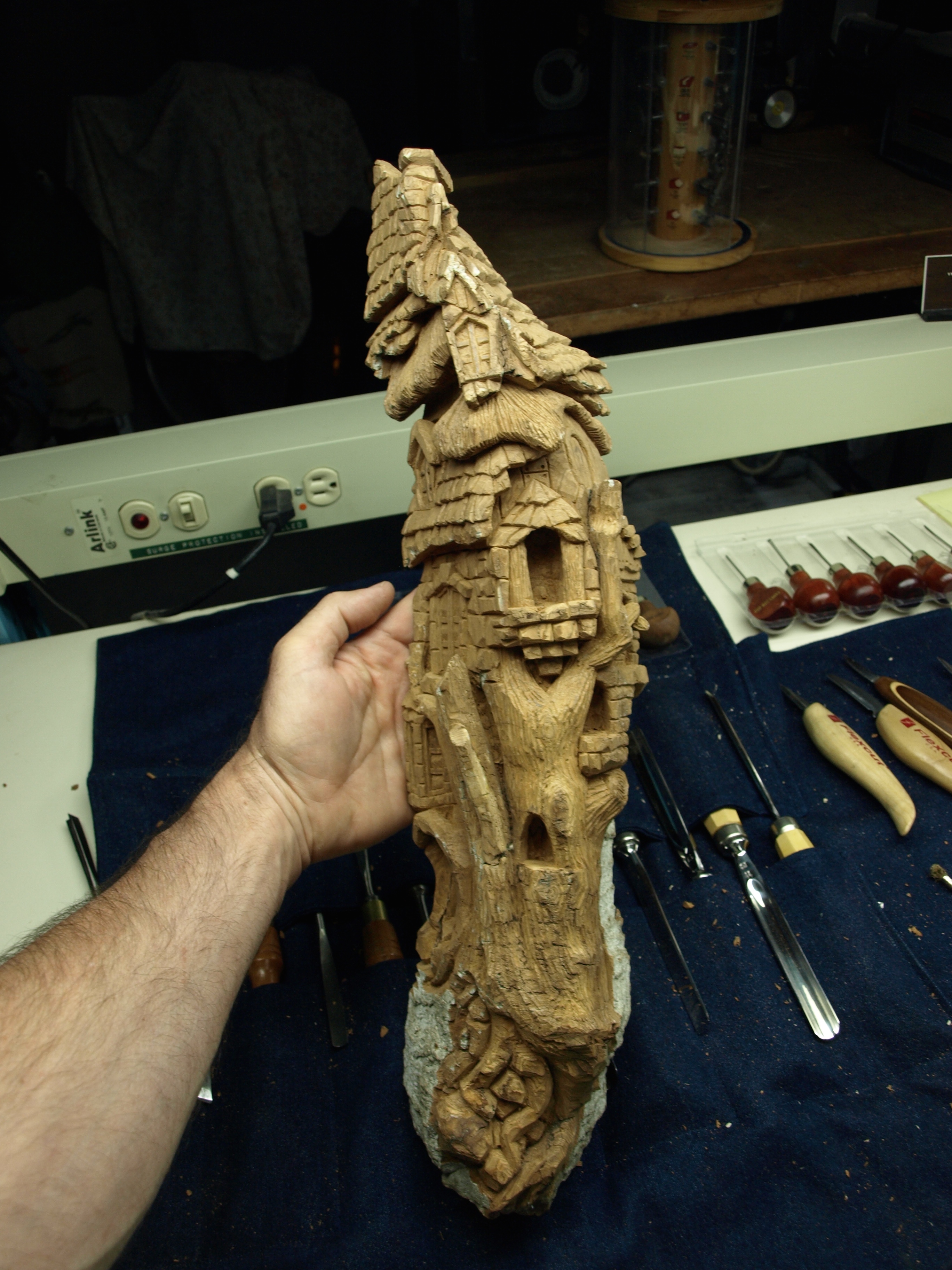
I carved some additional branches and another entranceway with stairs.  I added some roots wrapped around some loose boulders and rocks in the soil and I gave some of the bark of the tree texture with a small gouge chisel.  I’m looking forward to hollowing out in behind the windows to give it some additional depth.

A pretty quick carve and very enjoyable.  If you haven’t tried bark carving, give it a try.  I still like Peggy’s comment that it’s like doodling on a piece of paper with no firm plan in mind…if the bark looks like a particular item ( a branch, rock, window ), then that’s what you go with.
P5232639

More Progress on the Cabin

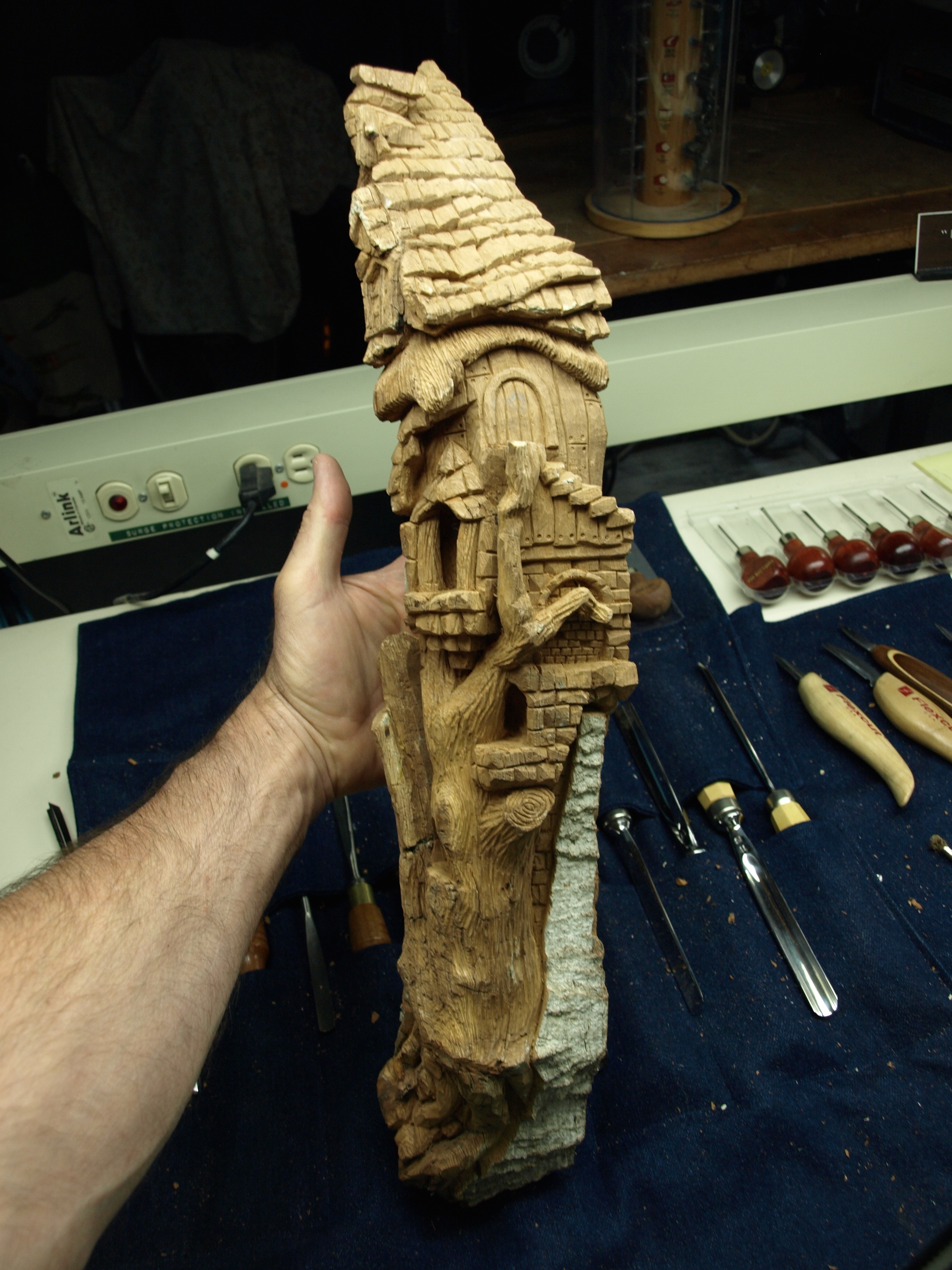
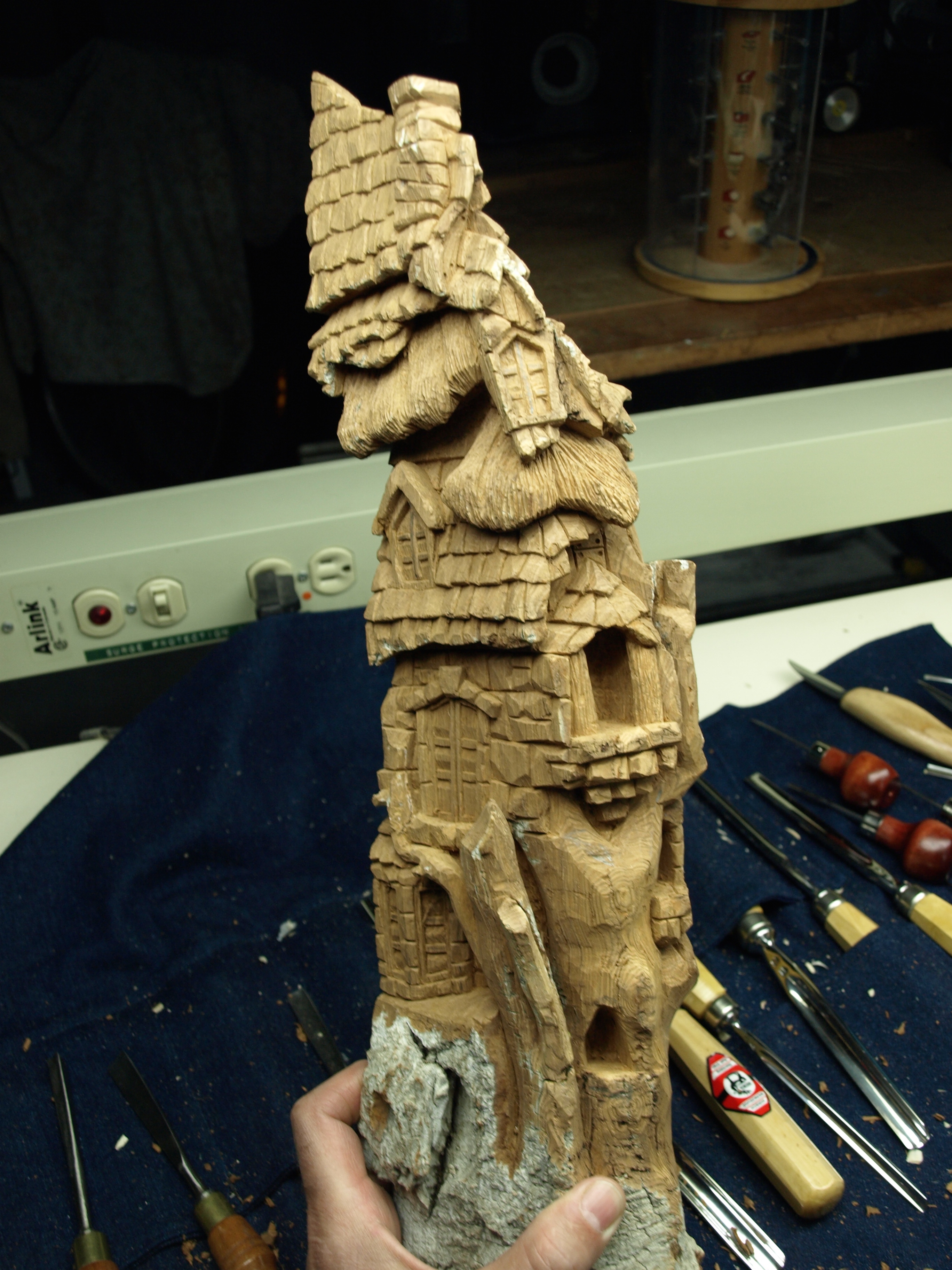
I’ve now started on the tree that is supporting some portion of the cabin.  I have a few branches as well as the main trunk that all support some block and brick-work as part of the cabin structure.  I also included a few gremlin sized holes in the tree trunk that lead to passages to who knows where.

Also included is a waterfall.  I had added a waterfall in an earlier bark carving of the the Cottonwood Mill and liked it so much that I thought I’d do a second waterfall for the cabin.  The white of the bark and the ridges in the bark really look like a waterfall to me.  I added just a little cavity in the block-work to make it look like the water is originating from there.  I’m not sure exactly where all that water is coming from…but we won’t worry about that too much.

Hope that you are enjoying the photos.

Tree Top Cabin

I carved a bit more of the cabin this afternoon…on the patio…in the sunshine!  Nice and relaxing.

You can see an additional window, some stone block-work and a bit of a terrace with two tree trunks holding up the shingled roof above.  As I’m carving, I’m getting ideas for how to carve the large tree trunk that the cabin is perched upon.  I can picture some ladders and various entrances and exits that wind their way up the tree and into the cabin.  Should be fun.

Again, if you’re interested in carving bark you’ll enjoy the fun of just carving whatever comes into your head.  The bark can be rather fragile, so you’ll just want to ensure that you use a sharp knife and chisels and that as many of the cuts as possible be of a slicing nature rather than a pushed blade that could break off a piece of the bark.  No matter how careful you are, you will break off some small pieces of bark and you can either modify your carving and carve around the break, or use a bit of white glue to place the bark back into position.  I usually just modify what I had in mind for that particular piece that broke off.

A Long Weekend Project

Yep, it’s a long weekend in Canada.  Now that I’m recently retired it has a bit less impact, but fun just the same.  The holiday is actually Queen Victoria Day, which we used to call “fire-cracker day” when I was a kid because we got to light off fireworks and fire-crackers in the backyard.  I still have a faint scar on one of my fingers from a fire-cracker gone bad!  It’s a holiday that’s been around for a long time, starting back in 1854 on Queen Victoria’s 35th birthday and before the Confederation of Canada.  Not planning any fireworks in the backyard but I’ll work on my bark carving on and off through the weekend.

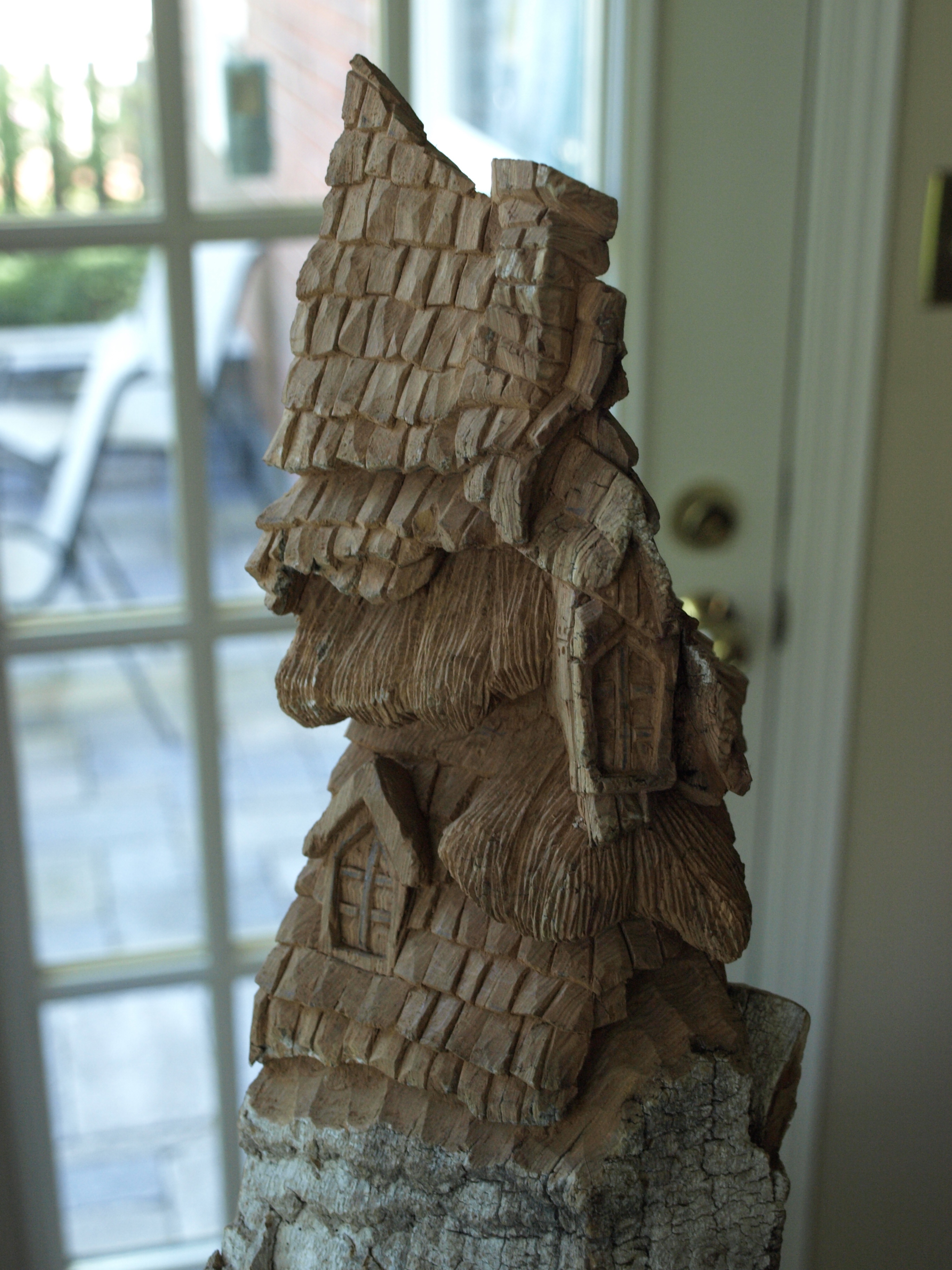
The cabin is coming along with the roof pretty much completed.  I chose to combine some shingles with a couple sections of thatched roofing.  It’s looking pretty good.  I’ll need to get my thinking cap on to complete the rest, but I’m picturing some wood structures, some large stone block work and at least one large tree trunk.  We’ll see what turns up.

Cottonwood Cabin

And now for a bit of a departure from caricature carvings and a return to bark carving.  I’ve completed two other bark carvings that you can check out in previous posts…the Cottonwood Mill and Castle Cottonwood.

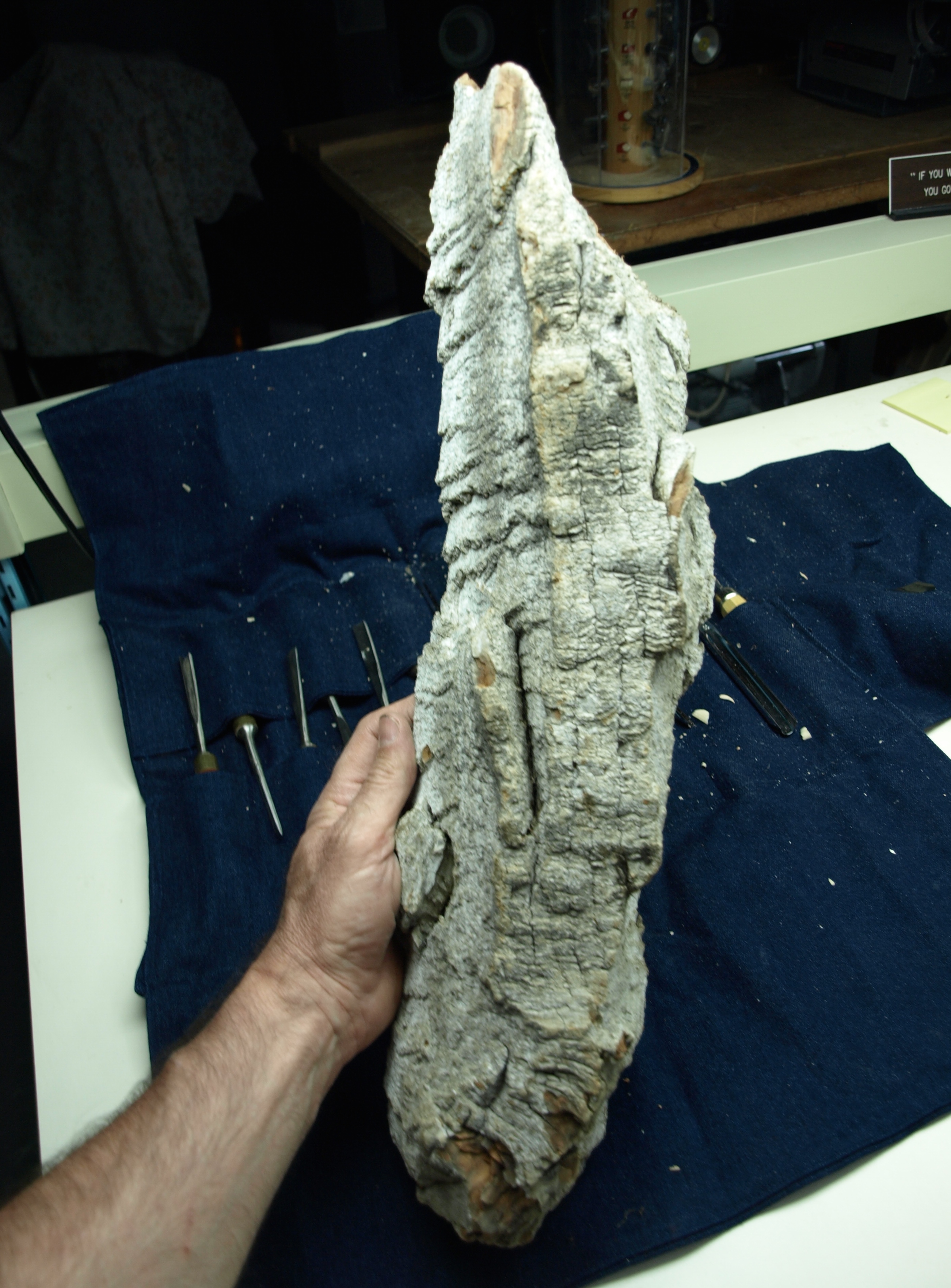
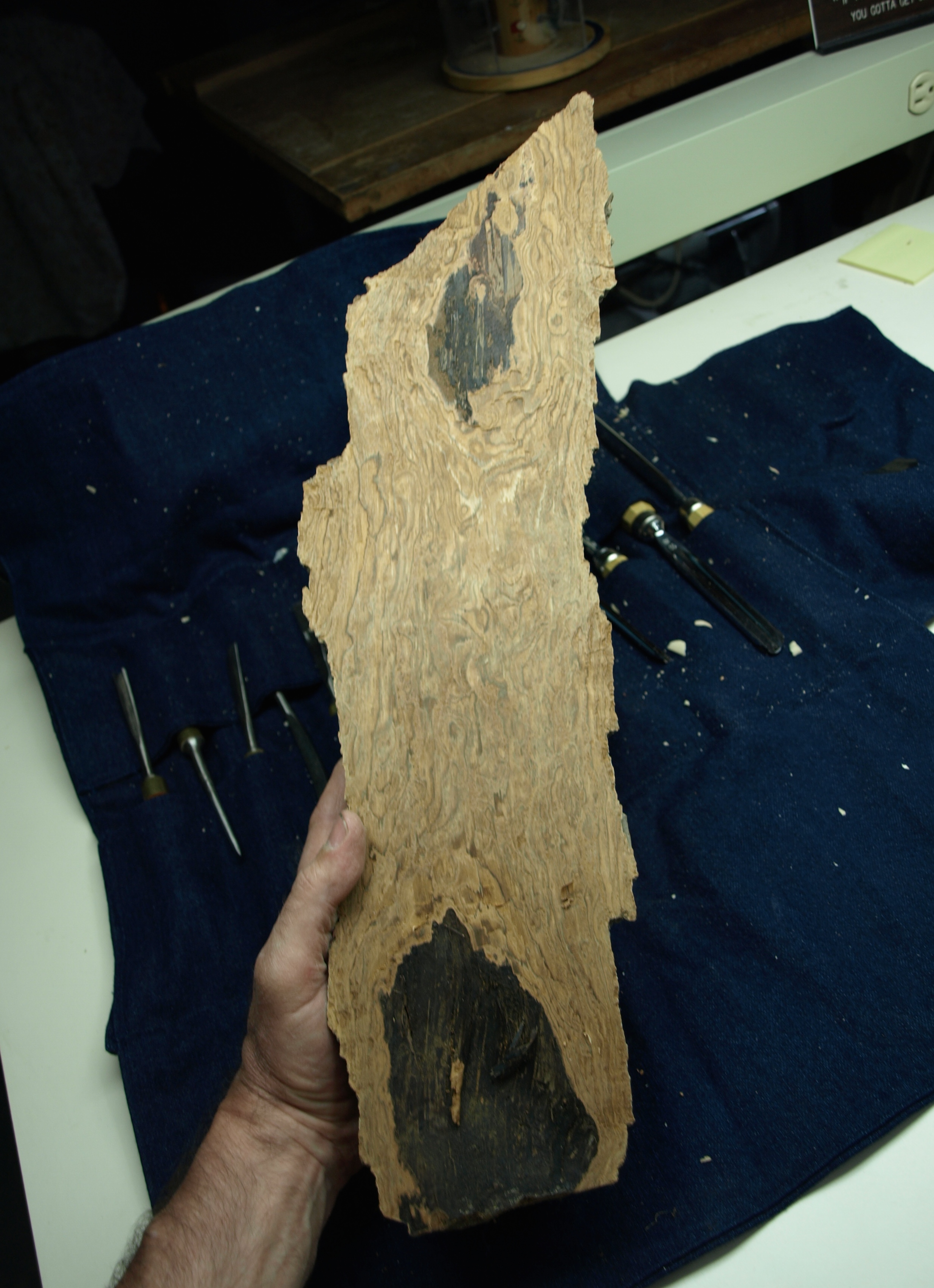
This one is already taking on the characteristics of a cabin in the woods.  In this case, the cabin is actually going to be on the woods in that it’ll be on the top of an old rotting tree surrounded by rock cliffs.  Hey…you take a look at the bark and try to imagine what’s inside it’s basic shape…and that’s what was there.

I should mention, that the “back” of the bark, or the piece against the tree, is first planed down a bit to get a flat rather than a concave surface so that when it’s finished as a wall hanging the carving sits flat against the wall.

Peggy looked over my shoulder as I started this one yesterday and came up with a pretty good description on how I approach bark carvings when she said “It’s like doodling.”  And I guess it is…you start with a basic idea and just start carving one piece and let that lead you to what the next piece is going to look like.  No prior sketch or hard plan, just an idea that evolves as you carve and as you clumsily break pieces off ( Cottonwood bark is a bit fragile ).

So, given that, I started with just roughing in the roof line and a few doors and windows.  Today I’ve done a bit more on the cedar roof shingles and detailed in one of the dormer windows.  Kind of mindless, relaxing carving and a break from pulling weeds.

A Watchful Eye on the Range

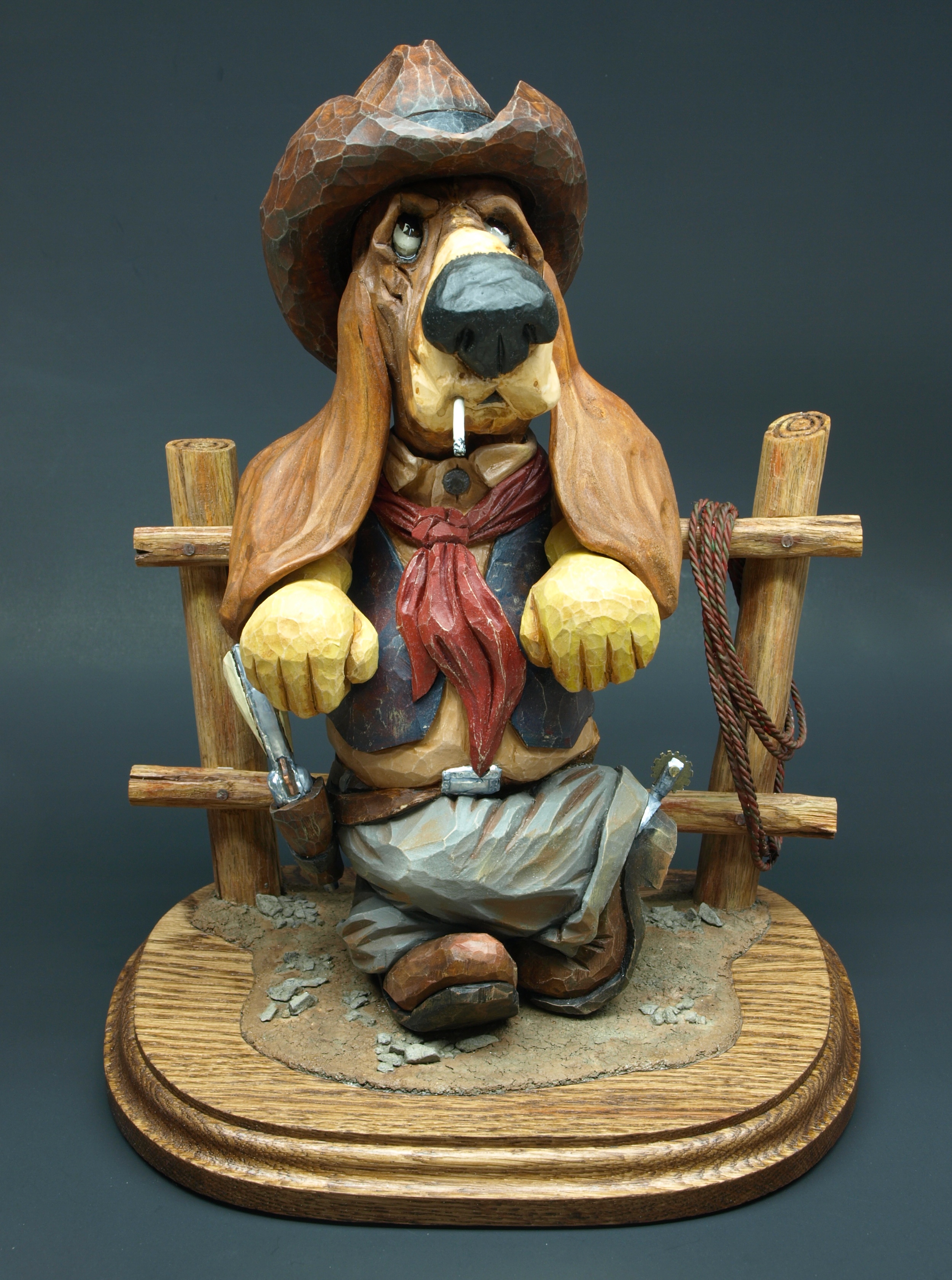
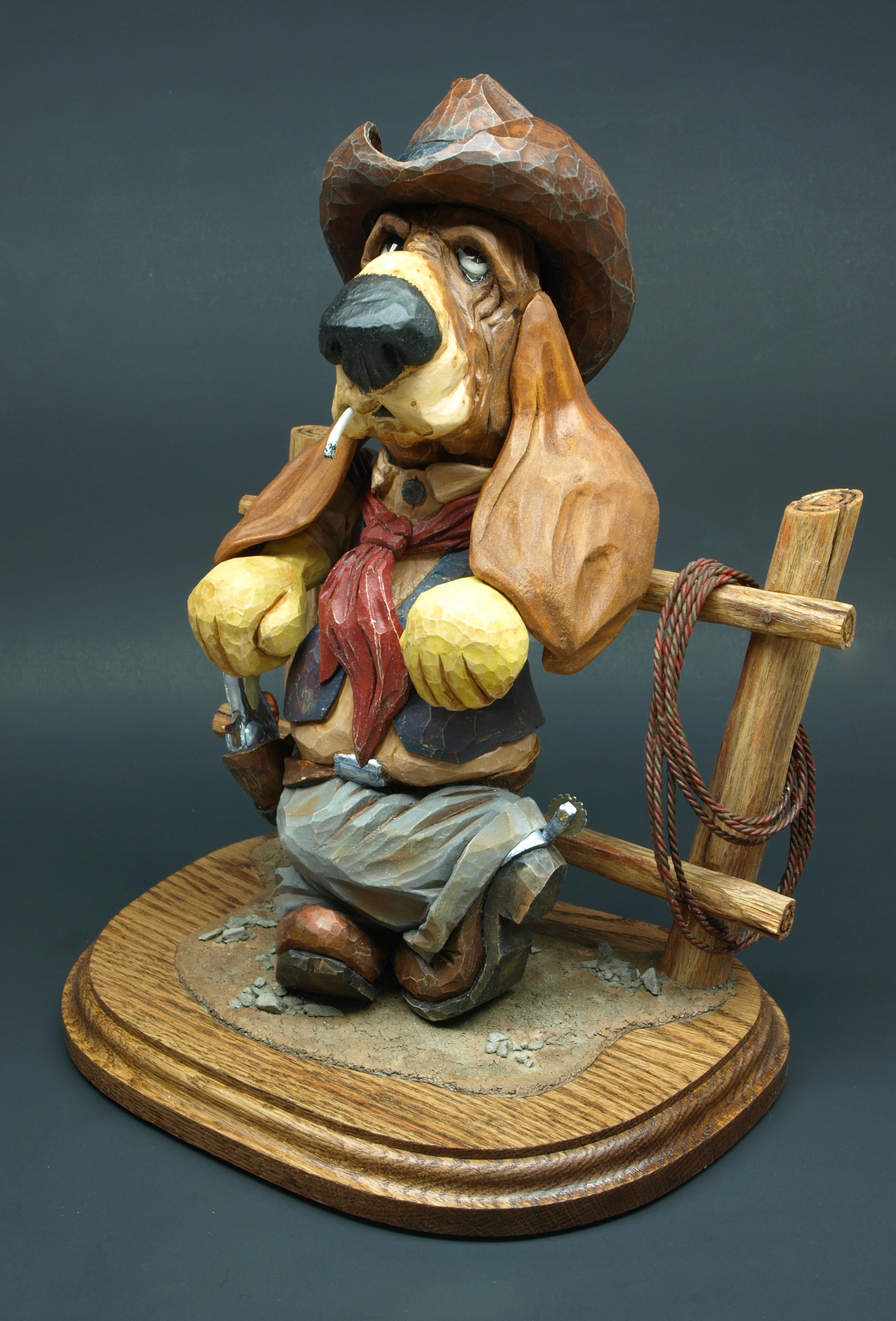
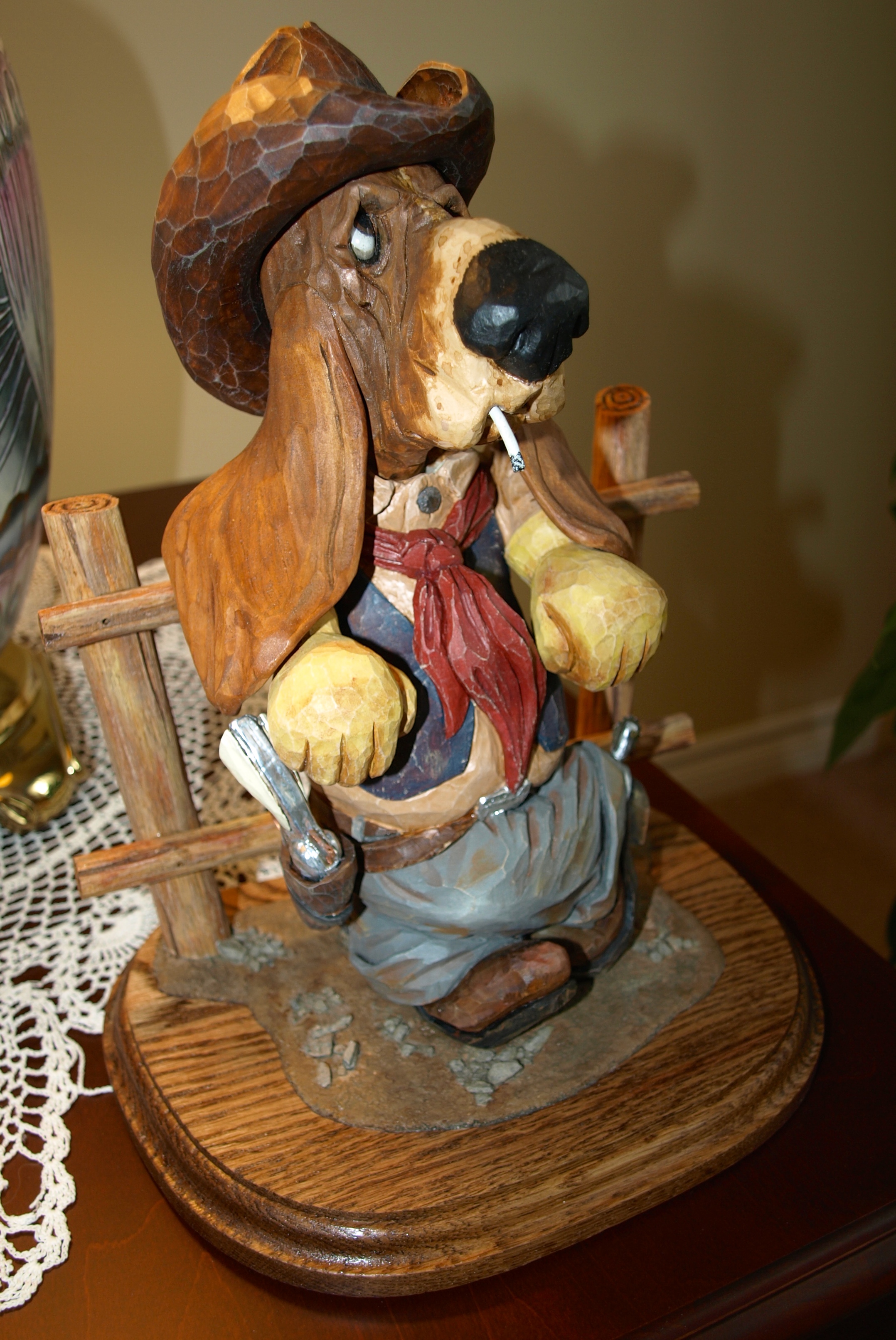
Buford is now complete and watching every move on that open range.  This carving was a lot of fun to complete.  I’ll get some additional photos up on the Flickr Site later today…but here’s a few shots for starters.

OLYMPUS DIGITAL CAMERA OLYMPUS DIGITAL CAMERA

OLYMPUS DIGITAL CAMERA

OLYMPUS DIGITAL CAMERA

End of the Rope

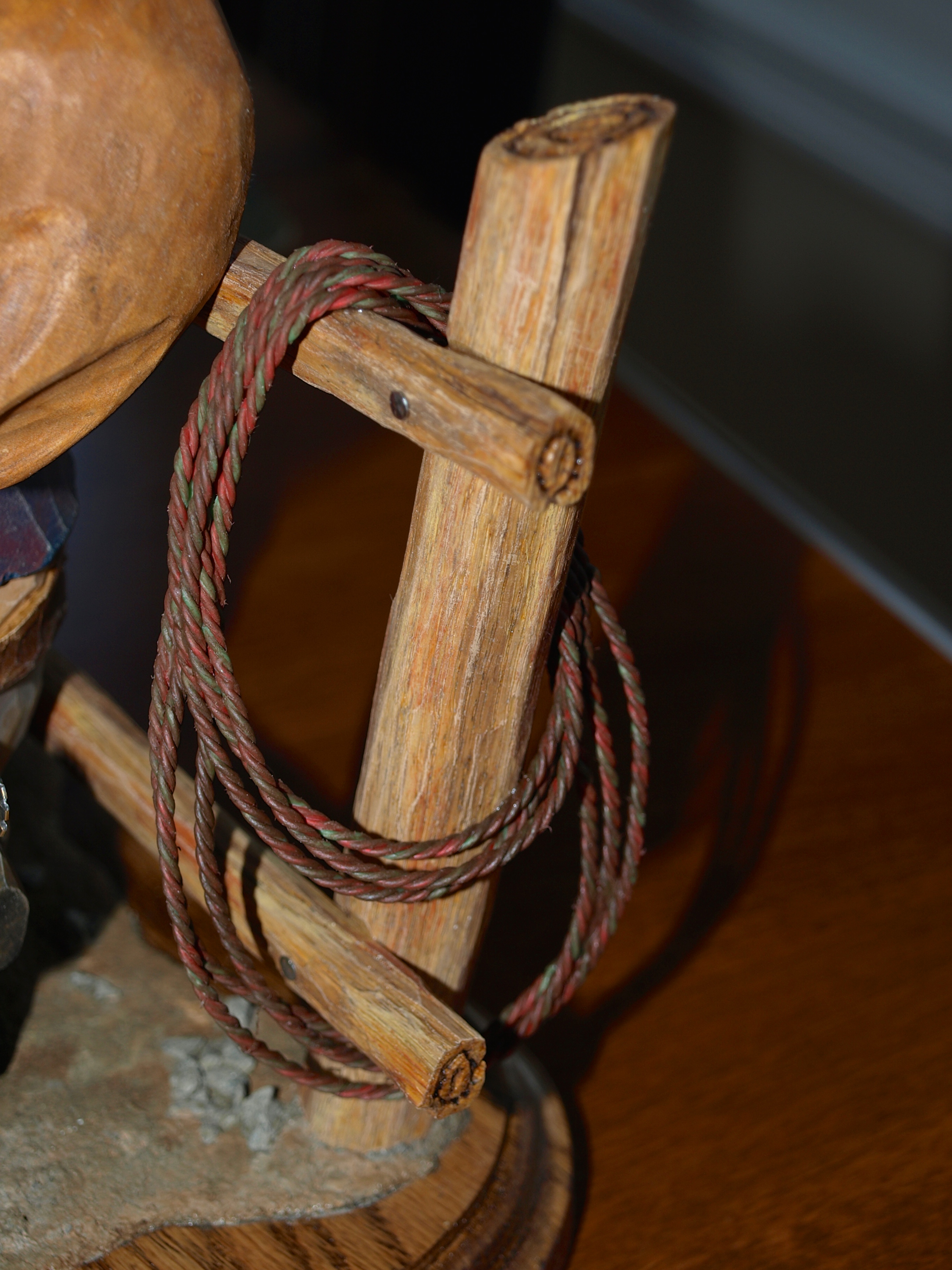
Well, I think I’ve come up with the rope that I’ve been looking to create.  Lynn Doughty also gave me a terrific suggestion with the use of gun bluing that he’s used very successfully in his carving sculptures ( Outwestwoodcarving ) and I do want to give that a try at some point.

I took a bit of a different path and decided to take a stab at using plastic insulation coated wire.  This wire is probably 20 gauge or lighter wire but has a plastic insulation coating surrounding it.  You’ve seen this kind of wire sheathed in a bundle of six or more individual wires and used for telephone hook-ups, 12 volt door bell installations, etc.

I took three of the multicoloured wires, ran some sandpiper over the insulation to roughen it up and wound them together using the portable drill process that I described earlier and that I’ve seen Lynn use.  I then looped and bent the wires into the shape that I was looking for and epoxied  them together in several points in the loop.

The roughened up wires looked just terrific as they looked like the actual fibres that you’d see in a rope.  After a bit of priming and painting of the rope, I did find that the roughened plastic coating took the paint well and I’m pretty happy with the finished product.

OLYMPUS DIGITAL CAMERA

A Quick Update

I know that this isn’t the greatest of photos, but I needed to show off how good Buford is looking now that the base is near complete and he’s been fastened and glued in place.  A few items to finish that I’m still not satisfied with…I want to tone down the silver parts with a bit of Payne’s Grey, I have some fake nails to make up for the posts and rails, and…

…I hate to admit it but my rope experiment failed miserably.  The paint just did not adhere to the wire that I used.  So, it’s back to the drawing board but I’ll get that licked this week.

OLYMPUS DIGITAL CAMERA

“It’s All About the Base, ’bout the Base…”

“…no trouble!”  I suspect that I’m probably infringing on a music copyright here.  Sorry.

But, when the base is looking right, the whole carving looks right.  You might recall that when I completed the “Hobo and Ned” carving, the track beneath the pump-car had a gravel and sand bed between the rails.  The gravel and sand was actually a stone and polymer mixture that is used between patio stones and pavers.  Once this mixture is swept into the gaps between the individual pavers and water is added, the mixture cures near rock hard.

I used the same mixture for the sandy soil around the fence posts.  In this instance, though, I didn’t want the soil to be coarse gravel like I wanted for the rail bed.  So, I took some cheese cloth and sifted the dry mixture to separate the larger pieces of grit.  I then added a diluted mixture of white carpenter’s glue rather than just straight water.  I felt that this would just make sure that the polymer really bonded well.  I picked out a few larger pieces from what I had sifted out of the mixture and added them, here and there, to the sandy soil with some of the white glue mixture.  Finally, I positioned the hound in place and “pushed” the boots into the mixture until I was satisfied with the overall stance.

OLYMPUS DIGITAL CAMERA

Once things dried, I thought it looked pretty good.  I want to add some colour now to make it look more on the sandy side, but, all in all, I’m pretty happy with the result so far.

OLYMPUS DIGITAL CAMERA OLYMPUS DIGITAL CAMERA

“I’ve Got Spurs that Jingle, Jangle, Jingle…”

“…as I go ridin’ merrily along…”

You couldn’t possibly remember that song.  I learned it in Grade 3 and we sang it regularly.  I just recently learned that it is a song written in 1942 and made popular by a number of singers, including Gene Autry.  I hummed it over the last couple of days as I made up a set of spurs for Buford.

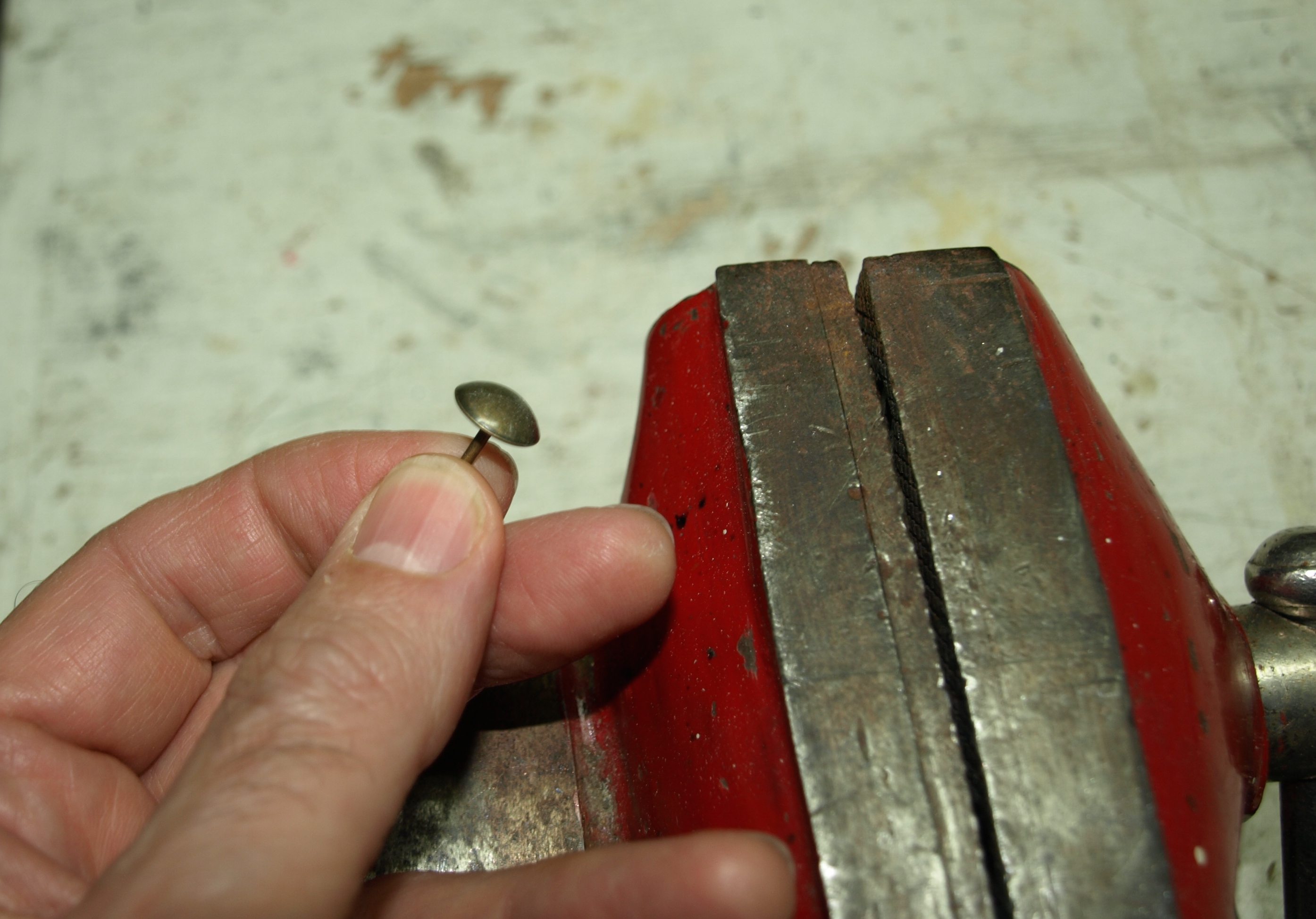
I started with a couple of brass tacks I found in a shop drawer.  I flattened them out in a vice to learn that the tack pin is actually a nail with a head.  That little nail ended up being a nice “axle” for a spinning spur.

OLYMPUS DIGITAL CAMERA OLYMPUS DIGITAL CAMERA

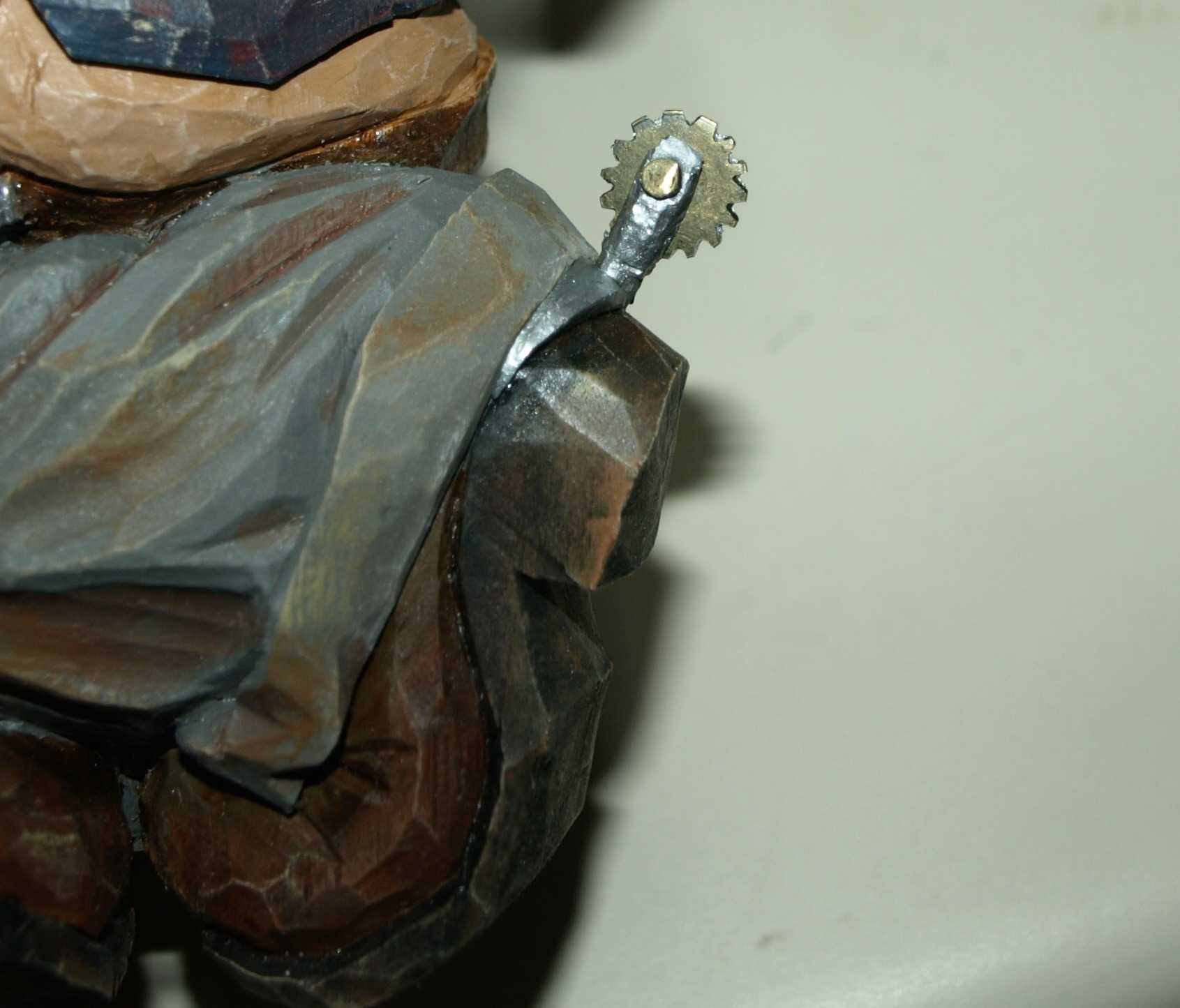
I then took a file and cut teeth around the circumference of the spur.  Following that, I used a bit of lead to fashion the bracket of the spur that wraps around the boot heel.  This bracket is actually in three pieces.  The part that has the spur “wheel” is drilled directly into the heel of the boot and epoxied in place.  The side portions of the brackets are flattened and shaped lead pieces that are epoxied to the sides of the boot.

The bracket portion of the spurs was given a coat of silver acrylic paint and a urethane coating.  I think that it looks pretty reasonable.  Plus, them spurs spin!

OLYMPUS DIGITAL CAMERA

Post Navigation